Carpet care guide
How to Clean a Fabric Sofa: Check One Letter Before You Start
- Find the cleaning code before any liquid touches the fabric
- W allows water-based cleaners; S means solvent cleaners only
- WS allows either; X means vacuum only, no cleaner at all
- Use a barely damp white cloth and blot, never rub
- Over-wetting is the usual cause of water marks
- Velvet and chenille need extra care with water
- X codes, rings and old stains are a job for a professional
Not sure your sofa is safe to clean at home? Ask us before you try.

NowOn this pageContents
do W
What do W, S, WS and X mean on your sofa label?
How to clean a fabric sofa depends on one letter on its care label: W allows water-based cleaners, WS allows water or solvent, S means solvent only and X means vacuum only. On W and WS fabric, vacuum first, then blot marks with a white cloth barely damp with warm water and a drop of washing-up liquid, go over it with plain water and let it air dry. Over-wetting is what leaves water marks, so S and X sofas, rings and old stains are better left to a professional clean, which starts from £30 per item with us.
They tell you which kind of cleaner the fabric can take. Hoover's sofa care guide defines S as "only solvent-based cleaning chemicals should be used" and X as "do not use any cleaners and vacuum only". The same guide warns that using the wrong product "could invalidate warranty claims or ruin your sofa completely", so the letter matters more than any cleaning hack you have seen online.
| Code on the label | What it allows | What you can do at home | When to stop and call |
|---|---|---|---|
| W | Water-based cleaners, such as a mild washing-up liquid solution | The full method below, after a patch test | A stain that has not shifted after one careful try |
| WS (Hoover writes it W/S) | Water-based or solvent-based cleaners | The method below, or a solvent cleaner for greasy marks | A mark that spreads or leaves a ring |
| S | Solvent-based cleaners only, no water | Vacuum, then a solvent upholstery cleaner on a white cloth | Any large mark, or any water spill that has dried |
| X | No cleaners of any kind | Vacuum and soft brushing only | Anything that brushing does not remove |
| No code you can find | Unknown | Vacuum only until you know | Before any liquid goes on |
Hoover describes solvent-based cleaners as products with "a chemical such as alcohol or acetone as their primary solvent". That is the cleaner, not a reason to reach for nail polish remover: use a product sold for upholstery and follow its label.
No cleaning code on your sofa?
Look at the other label. Under the Furniture and Furnishings (Fire) (Safety) Regulations 1988, upholstered furniture first supplied in the UK must carry a permanent label that starts with "CARELESSNESS CAUSES FIRE" and gives "the description of all the covering materials included in the article". It is not a cleaning code, but it tells you the fibre, which is the first thing the maker or a cleaner will ask.
If neither label helps, treat the sofa as X until the maker or retailer tells you otherwise. Even X allows vacuuming; a wet cloth on the wrong fabric is where the damage starts.
How to clean
How to clean a fabric sofa at home, step by step (W and WS)
This method is for W and WS fabric only. It is the hand method, with no machine, and it is the method the care guides we read describe in some form.
- Strip the cushions off and vacuum everything. Use the soft brush attachment along the seams, arms, back and the deck under the cushions. Dry crumbs and grit turn to mud the moment water reaches them.
- Patch test. Hoover's guide says to "Test the cleaner on a hidden spot before using it on the entire sofa". The back of a skirt or the underside of a cushion works well. Wait until the spot is fully dry before you judge it.
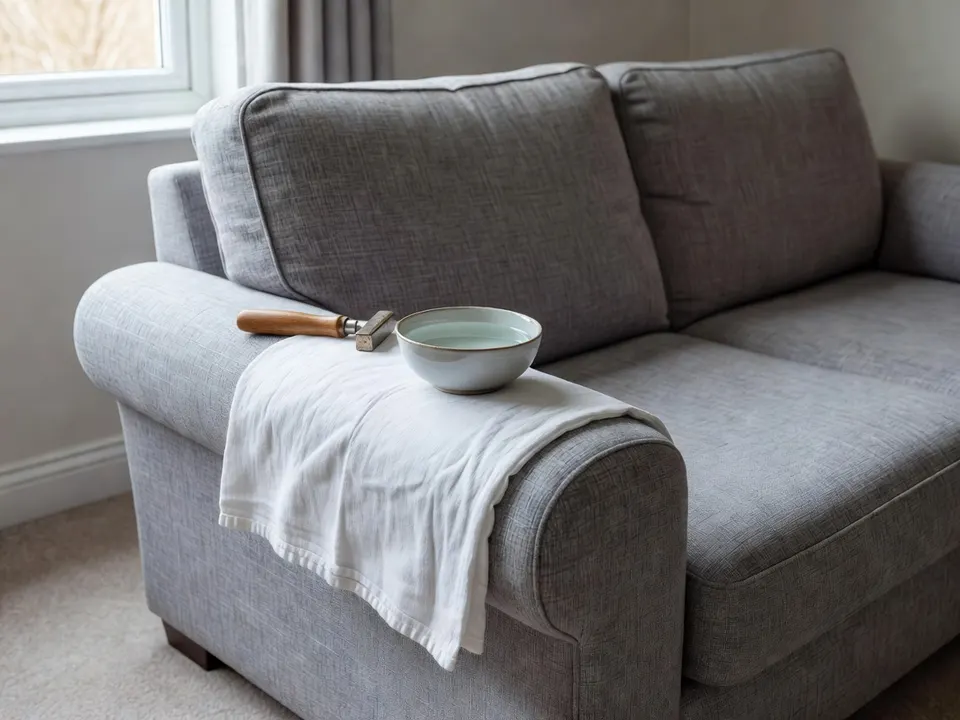
- Mix a weak solution. One or two drops of mild washing-up liquid in a bowl of warm water is enough. Warm, not hot: Furniture Direct Online's guide warns that hot water "can set certain stains permanently".
- Use a white cloth, wrung out hard. A coloured cloth can leave its dye on a pale sofa. Work in small sections and blot each mark from its outer edge towards the middle, so it does not spread.
- Rinse the soap out. Go over each section with a second cloth dampened in plain water. In our view, soap left in the fibres holds on to fresh dirt, so a sofa cleaned without this step looks grubby again sooner.
- Dry it properly. Press a dry towel into each section, then follow the drying advice in the water marks section below.
- Brush the pile up once dry. A soft brush, used in one direction, lifts flattened fibres and evens out the look of the fabric.
On a WS sofa, a greasy mark on an arm or headrest may lift better with a solvent upholstery cleaner than with soapy water. Test it on the same hidden spot first.

changes for S
What changes for S and X sofas?
The method above is off the table. Hoover's guide is direct about S fabric: "Do not use water on sofas marked with S as the fabric could shrink or be damaged when in contact with water."
- S code: use as little of the solvent cleaner as its label allows, and let it evaporate.
- X code: no spray, no foam and no wipes.
Steaming is not for these sofas, in our view. Steam is water, so it carries the same risk on S fabric as a wet cloth, and X fabric is not meant to take anything. Steaming a fabric sofa is only worth considering on a W or WS code, and even then the cleaning code on the label, not the steamer's box, has the final say.

How to clean
How to clean a velvet sofa without crushing the pile
Treat velvet as delicate whatever its code says. The pile is raised, so pressure and moisture both show. The Cotswold Company's care guide for its own velvet sofas says "Getting your velvet sofa wet can damage its overall appearance, so avoid using damp cloths", and recommends "a velvet brush or gentle steam" for light marks.
- Vacuum on low suction with a soft brush, and brush in the direction of the pile.
- Blot spills straight away. Furniture Direct Online's guide notes that rubbing velvet "flattens the pile permanently".
- If your velvet is W or WS coded and you do use a damp cloth, keep it barely damp and test first.
- Brush the pile back into place once the fabric is fully dry.
Cotswold also says "Natural shading on your upholstery will occur due to the raised pile" and that "marking, bruising and crushing is a natural occurrence" on its velvet. So not every mark is dirt, and not every mark will clean out. We would only use the gentle steam Cotswold mentions if your velvet's code is W or WS.
Why chenille drinks up a spill so fast
Chenille soaks up liquid fast. Furniture Direct Online's guide says chenille "is generally sensitive to excess water, and care codes vary by manufacturer", and warns never to soak or machine wash it, "since the pile yarns can unravel or shrink". Blot a spill the moment it happens, and follow the code on your own sofa rather than a general chenille rule.
Linen or microfibre: why your own label decides
We have not found a maker's care guide that gives one rule for every linen or microfibre sofa, because both come in many blends and finishes. Two linen sofas can carry different codes, so go by the label on yours, patch test, and use the least liquid that works.
Why do water marks
Why do water marks appear, and how do you stop them?
Too much water is the cause the care guides point to. Furniture Direct Online's guide lists over-wetting as a mistake "which leads to watermarks, mildew and a musty smell", and on S fabric Hoover adds the risk of shrinking.
To dry a sofa without leaving a ring:
- Press, do not rub, with a dry towel until it stops picking up moisture
- Open a window or run a fan so air moves across the fabric
- Skip the hairdryer: M&S's cleaning guide says a heat source "may cause the stain to set in"
- Keep people and pets off the cushion until it is completely dry
A ring on S, X or velvet fabric is the point to stop. More water will make it bigger. On W fabric, one light pass with plain water on a barely damp cloth, followed by a fast dry, is worth a try. If the ring is still there after that, stop: in our view each extra wetting risks a wider ring, and it is a job for a professional clean.

Five mistakes that leave
Five mistakes that leave a fabric sofa worse than before
Each of these can do more harm than the stain it was meant to fix, usually through the wrong product or too much water.
- Using a carpet shampooer on upholstery. Furniture Direct Online warns that carpet machines not approved for upholstery "can over-wet the fabric or leave a sticky residue that attracts more dirt".
- Wiping with baby wipes. The same guide says they often contain alcohol and detergents that strip fabric and leave residue behind.
- Reaching for bleach. The same guide says bleach-based sprays discolour and weaken fibres permanently.
- Mixing bicarbonate of soda with vinegar. Furniture Direct Online points out that the two neutralise each other. Use bicarbonate dry for smells, and use vinegar separately, only where the code allows water.
- Putting covers in the washing machine because they unzip. A cover's own label can differ from the sofa's code, and covers can carry a fire-retardant treatment. Designer Sofas 4U's care guide says machine washing "can affect how flame retardant they are", and The Cotswold Company advises having its loose covers "professionally dry cleaned in situ".


When is it time
When is it time to call a sofa cleaner?
When the code says no, or a home attempt has already left a mark. Knowing how to clean a fabric sofa at home also means knowing when to stop, and these are the cases where we would get a professional in:
- The label says X, or S with a large mark
- A water ring has formed, or come back after one careful try
- Old, set-in stains such as red wine or ink
- A smell that bicarbonate of soda and fresh air have not shifted
Our sofa cleaning service starts with the same thing this guide does: we patch test before any cleaning. Fabric prices start at £30 for an armchair, £45 for a 2-seater, £60 for a 3-seater and £80 for a corner sofa, with an £80 minimum per visit. You pay after the work, by cash or bank transfer.
For a single stubborn mark rather than the whole sofa, our stain removal service starts from £15 per stain. If your sofa is leather rather than fabric, the method is different: see how to clean a leather sofa.
Recent jobs
Recent jobs from our own visits
These are photos from our own jobs, not stock pictures. Each card names the town where that job was done.
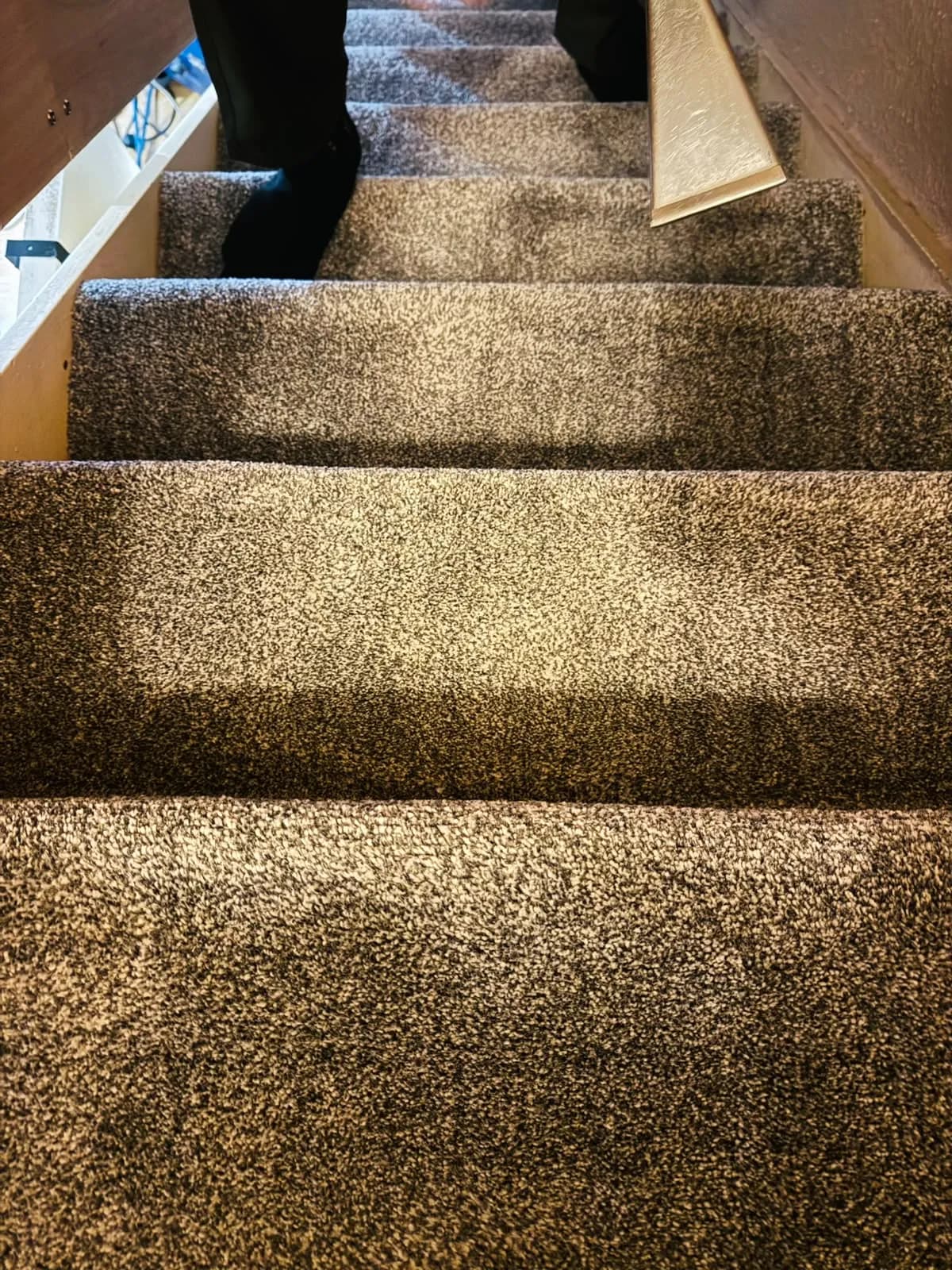
Stair Carpet Mid-Clean
Salford · Carpet Cleaning
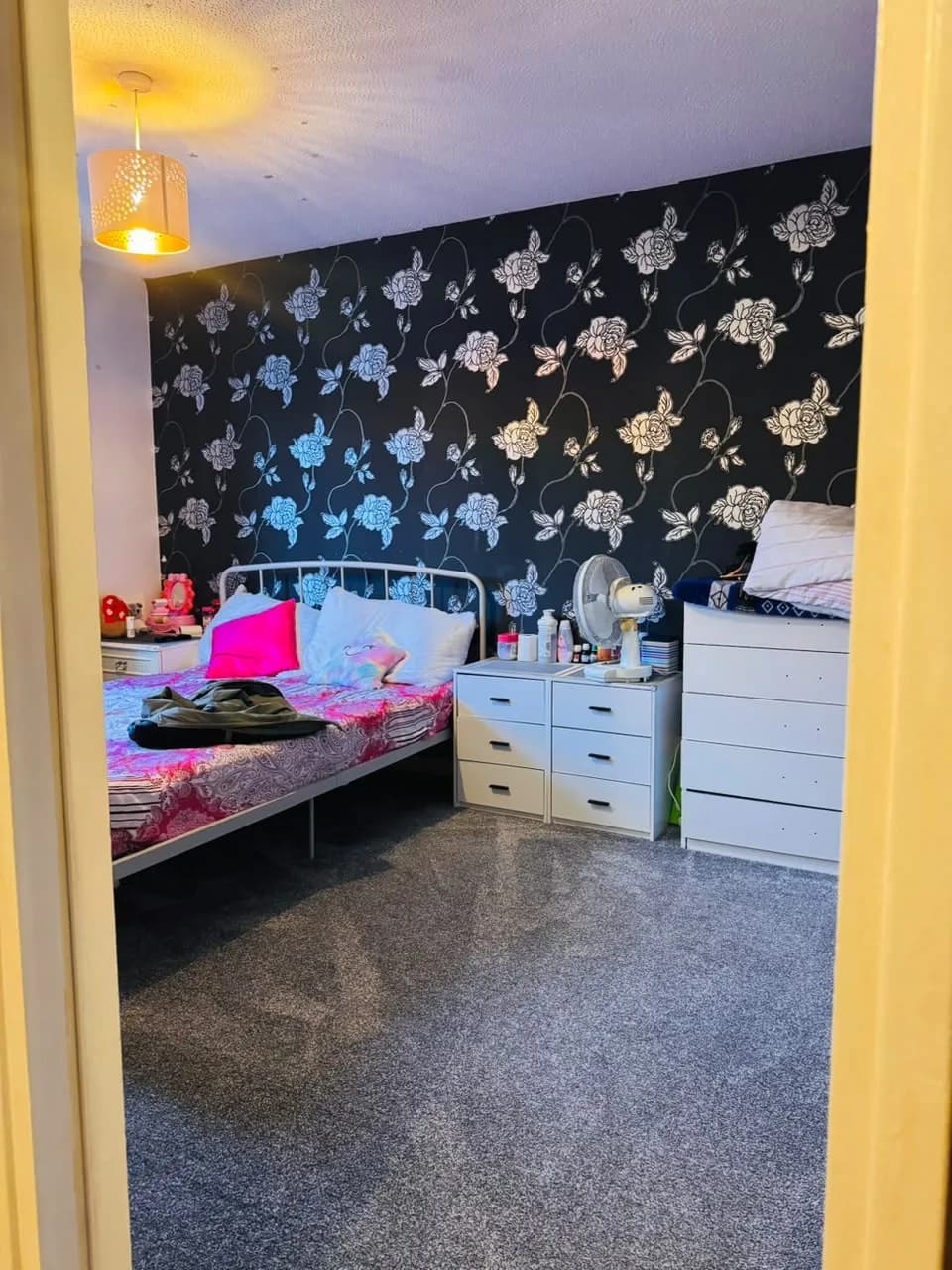
Grey Bedroom Carpet Cleaned
Prestwich · Carpet Cleaning
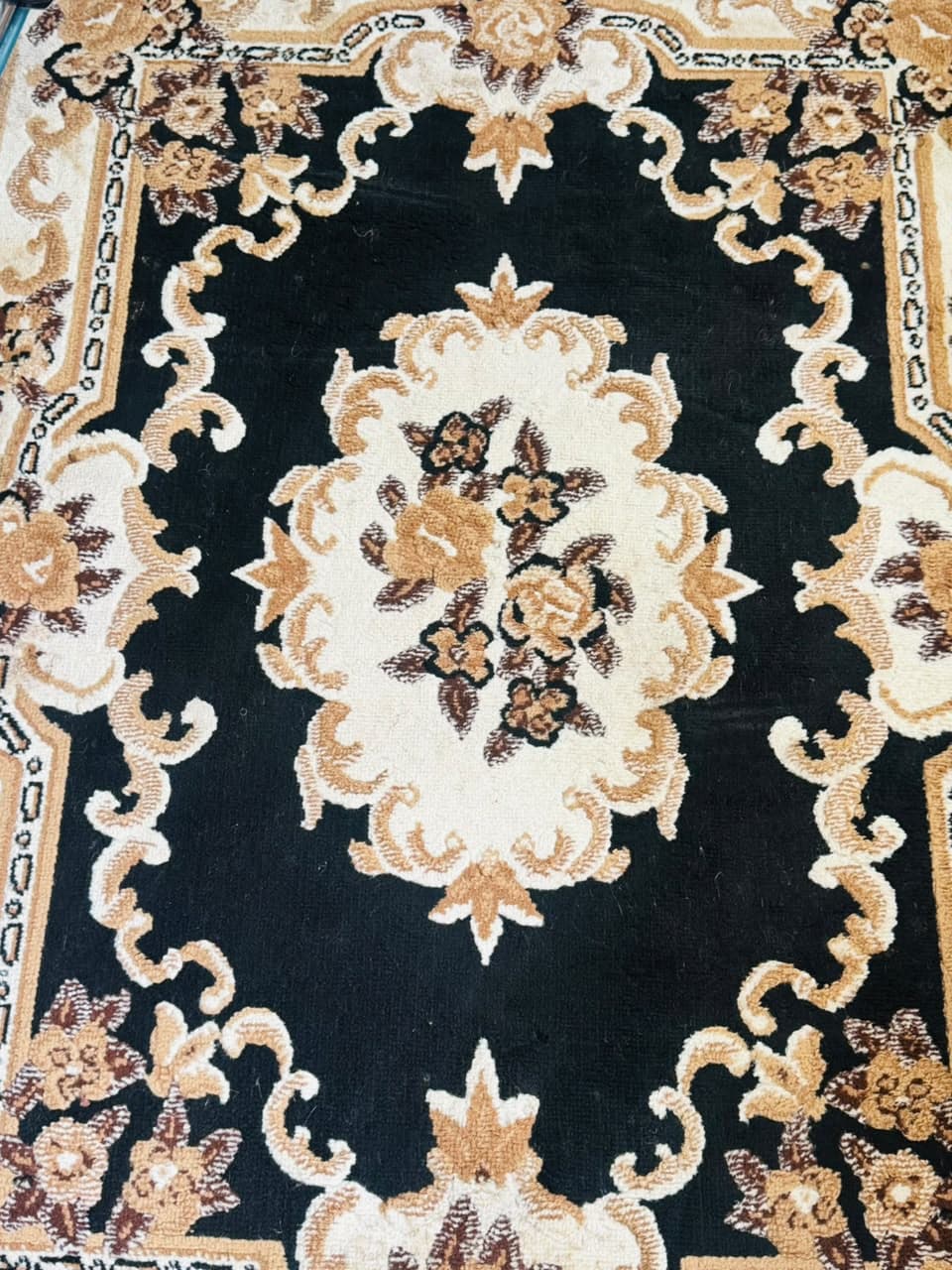
Close-Up of a Cleaned Wool Rug
Crumpsall · Rug Cleaning
About this page
About This Page
Written by Hamza Moeen, Researcher & Deep Analyst
Who we are: Blowup Cleaners is the trading name of Hopollo Ltd, company number 16735427, registered in England & Wales. We are based at 9 Rectory Road, Cheetham Hill, Manchester M8 5EA, and we clean sofas, carpets, rugs and mattresses across Manchester and roughly 30 miles around it.
Last updated: November 2026
Rather have a professional read the label for you? We are open 24 hours, 7 days a week.
Sources
Sources
- legislation.gov.uk: Furniture and Furnishings (Fire) (Safety) Regulations 1988, Schedule 7
- Hoover UK: How to Clean a Fabric Sofa at Home
- Furniture Direct Online: How to Clean a Fabric Sofa
- The Cotswold Company: Sofas and Armchairs Care Guide
- Marks & Spencer: How to Clean a Sofa
- Designer Sofas 4U: Fabric Sofa Care Guide
Questions
FAQs
How do you find the cleaning code on a couch?
Look on a tag under the seat cushions first. Furniture Direct Online's guide says the code is usually there, along the base of the frame, or in the paperwork that came with the sofa. If none of those has it, check the retailer's product page or ask the maker before you use any liquid.
Can I use Fairy liquid to clean a sofa?
If the label allows water, the brand matters less than the strength. Keep the mix very weak, because suds are hard to rinse out of a seat cushion, and patch test it like any other cleaner.
Is it better to shampoo or steam clean a couch?
Steam, if the label allows water at all. A home shampooer tends to leave more water and soap behind, and that is how residue and water rings start.
Are water stains permanent on a couch?
Some can be. Most common stains can be removed, but some may be permanent, and rings on velvet, S or X fabric are the hardest to judge until we see them. We look at the mark and give honest advice before we start.
What do professional cleaners use to clean couches?
It depends on the fabric. We clean upholstery by hot water extraction, low-moisture or dry cleaning, depending on the fabric, and spot treatment and a deodoriser come with every clean. If you are not happy with the clean, we will re-clean it free.