Carpet care guide
Mould on Carpet: Causes, Removal and When to Replace
- A tiny surface patch can sometimes be cleaned, but mould on the underside often means replacing the carpet
- Sort the damp as well, or a cleaned carpet ends up on the same wet floor
- Renting in England? The guide sets out who has to fix damp and mould
Carpet sound again now the damp is fixed? Get a quote for a deep clean.

NowOn this pageContents
Can a Mouldy Carpet
Can a Mouldy Carpet Be Cleaned, or Should You Replace It?
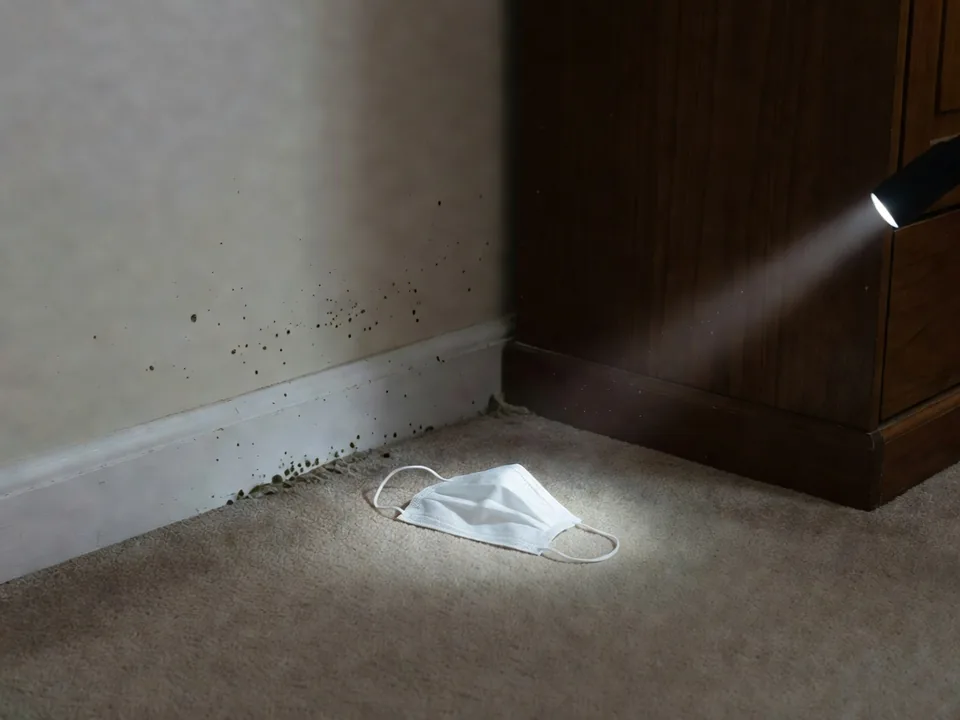
Mould on carpet means moisture has been sitting in the pile, the backing or the underlay. A tiny surface patch can sometimes be cleaned. Mould that has reached the underside often means the carpet has to go.
Whatever you decide, sort the damp as well. Otherwise a cleaned carpet, or a brand new one, ends up on the same wet floor.
A mouldy carpet is only worth cleaning when the patch is very small and on the surface. Anything bigger or deeper needs a qualified professional, and the carpet may well have to be replaced.
That is our view, and official advice leans towards caution. UK government guidance on damp and mould says absorbent materials such as carpets may have to be thrown away once mouldy. Removing the mould completely may be difficult or impossible.
The same document says most tenants can reasonably deal with very small amounts of mould in general. Larger areas should only be handled by qualified professionals. It gives no carpet-specific method.
Use this table to judge your own carpet:
| What you can see | Our honest view |
|---|---|
| A few small spots on the top of the pile | Worth trying the small patch steps below |
| Spots keep returning after a careful clean | Treat it as a replacement job |
| Mould under carpet, on the backing or the underlay | Replace the affected carpet and underlay |
| A wide patch, or several rooms affected | Call in a qualified professional; the carpet will probably need replacing |
| Carpet soaked by a leak or flood and still wet | Replace it if it cannot be cleaned and fully dried |
| Musty smell but nothing visible on top | Mould may be on the underside. Check carefully, with a mask on (see the FAQ on lifting carpet) |
The flood row follows official advice too. Water-damaged materials that cannot be cleaned or completely dried should be removed, and the area around them dried out.
If you rent, the carpet may belong to your landlord, so read the tenants section below before you bin anything.
Why Carpets Go Mouldy
Why Carpets Go Mouldy in UK Homes
Carpets go mouldy when moisture keeps reaching them and the room never dries out. It can come from humid air, through the walls or floor, or from water damage such as a leak.
GOV.UK names four kinds of damp: condensation, penetrating, rising and traumatic. Traumatic damp covers water from leaking pipes, overflowing baths, burst pipes or flooding.
Condensation is the most common form of damp. Moisture from cooking, showering and drying laundry builds up in the air and settles on the coldest surfaces.
Why Mould Hides Behind Sofas and Wardrobes
GOV.UK gives the low parts of walls behind sofas and wardrobes as examples of where condensation forms.
Carpet in those cold corners, along an outside wall, can stay damp for a while. Mould under the carpet edge may grow before anyone spots it.
Homes More Likely to Have Damp
Some homes carry a higher risk of damp and mould. The government's list includes homes that are:
- Poorly insulated, or expensive to heat
- Poorly ventilated
- Without an adequate damp proof course
- Poorly maintained or overcrowded
Homes where people feel unable to open windows, because of security, noise or outdoor air pollution, are on the list too.
Blame is ruled out plainly. Officials call it "totally unreasonable" to put damp and mould down to lifestyle choices, because cooking, bathing and drying laundry are everyday tasks.
Mildew on Carpet After Cleaning or a Spill
A carpet left wet for too long can also turn musty. Which? advises drying damp patches as quickly as possible after cleaning, so the carpet does not develop the smell of mildew.
For how drying time varies after a professional clean, see our guide on how long carpet takes to dry after cleaning.
Is Mould on Carpet
Is Mould on Carpet Dangerous?
Mould in carpet can affect your health. Damp and mould can release spores, allergens and irritants, and the risk grows the bigger the problem and the longer it is left.
These health facts come from GOV.UK guidance on damp and mould. It was published by the Department of Health and Social Care (DHSC), the Ministry of Housing, Communities and Local Government (MHCLG) and the UK Health Security Agency (UKHSA).
The same guidance says that damp alone, even with no visible mould, can raise the risk of health problems.
Symptoms Linked to Damp and Mould
Damp and mould are linked with:
- Cough, wheeze and shortness of breath
- New or worse allergies, rhinitis and asthma
- Airway infections, including aspergillosis
- Eye irritation, eczema and itchy skin or rashes
In the most severe cases, damp and mould can cause serious illness and even death.
Who Needs Extra Care
Everyone is at some risk, but damp and mould should be tackled with urgency where these groups live:
- People with asthma, COPD, allergies or other lung or heart conditions
- Anyone with a weakened immune system, for example during cancer treatment
- Pregnant women and those who have recently given birth
- Children, young people and older people
- People who are bedbound, housebound or living with a mental health condition
If anyone at home has symptoms that worry them, speak to a healthcare professional. This page is general information, not medical advice.
How to Get Rid
How to Get Rid of Mould on Carpet: A Small Patch, Step by Step
DIY cleaning is only for a few small spots on the surface. Remove them promptly, and get the water source fixed as well.
The safety points below come from the GOV.UK damp and mould guidance. The treating and drying tips come from Which?.
- Find the water source. Fix a leak or tackle condensation where you can, and report it to your landlord if you rent. Removing surface mould alone will not stop it coming back.
- Take a photo. Photograph the mould and, if possible, draw around it. That record helps trace the cause.
- Cover up. Wear a mask, gloves and goggles so you avoid contact with spores and cleaning products.
- Close the door, open the window. A shut door helps stop spores spreading to other rooms. Keep the window open during and after the job.
- Choose a mould and mildew product. These are preferred to bleach, for health and safety reasons. Which? adds that the remover must suit the material you are treating.
- Test it out of sight. Which? advises testing products on an inconspicuous area first, in case they damage or discolour the carpet.
- Treat lightly and follow the label. Which? warns that a lot of water can end up soaking into the carpet. Damp materials are prone to mould, so a wet backing works against you.
- Dry it fast. Which? suggests heating on and windows open. It warns against a space heater or hairdryer, which could burn the carpet.
- Bag and bin the cloths. Wash or throw away cloths and sponges, and wash or bin protective clothing afterwards.
Then keep watching the spot. If the mark or the musty smell returns, the mould may be deeper than you can reach, and replacing the carpet is the safer choice.
Damp sorted and wondering if the carpet is worth a clean? Talk it through with our team.
Where Blowup Cleaners Fits
Where Blowup Cleaners Fits In (and Where We Don't)
We are a carpet cleaner, not a damp or mould specialist. We do not treat damp, remove mould growth or replace carpets.
Once the damp source is fixed and the carpet is sound, we offer:
- Hot water extraction (steam cleaning) for carpets
- Spot treatment and a deodoriser in the price
- Eco-friendly cleaning products
- Honest advice before we start
Our steam carpet cleaning for homes across Manchester starts from £25 per room. Drying time depends on the carpet, how dirty it is, airflow and weather.
Tenants leaving a flat that had damp can book our end of tenancy carpet cleaning. It includes every carpet, the hall, stairs and landing. You get a dated receipt.
Tenants and Landlords
Tenants and Landlords: Who Fixes Damp and Mould?
In England, landlords are legally responsible for addressing damp and mould in the homes they rent out, whatever the type of damp. Social housing tenants also have fixed timeframes under Awaab's Law.
Status, checked 30 October 2026 (England only): Awaab's Law Phase 1 has applied to social housing since 27 October 2025 · Phase 2 starts on 30 November 2026 · extending it to private renting is out to consultation until 18 December 2026.
This is a summary of official guidance, not legal advice.
The DHSC, MHCLG and UKHSA guidance sets out five main legal standards on damp and mould in rented homes. Three of them are:
- Homes (Fitness for Human Habitation) Act 2018. It amended the Landlord and Tenant Act 1985. A rented home must now be free of hazards, including damp and mould, serious enough to make it unfit to live in.
- Landlord and Tenant Act 1985. Tenants can take their own action under sections 9A and 11 in some circumstances.
- Housing Act 2004. Homes must be free of the most serious "category 1" hazards. These are rated under the Housing Health and Safety Rating System (HHSRS), which covers mould and all types of damp.
These apply to private and social tenants alike.
Private Renting
GOV.UK's page on repairs in private renting says the landlord is always responsible for repairs to:
- The structure and exterior of the property
- Heating and hot water
- Basins, sinks, baths, pipes and drains
- Gas appliances, pipes, flues and ventilation
Tenants should report repairs or mould to the landlord, straight away for faults that could damage health, and keep paying rent while they wait.
If repairs are not done, that page says the council's environmental health department must act if it thinks the problems could harm you.
Social Housing and Awaab's Law
Awaab's Law is named after Awaab Ishak, a two-year-old who died in 2020 after long exposure to mould in his home. It applies to social housing in England, such as council and housing association homes.
Under Awaab's Law, social landlords must:
- Investigate a potential significant hazard, such as serious damp and mould, within 10 working days
- Give the tenant a written summary within 3 working days of the investigation ending
- Carry out the safety work within 5 working days if a significant hazard is found
- Investigate and make safe an emergency hazard within 24 hours
- Arrange suitable alternative accommodation, at their cost, if the work cannot be done in time
Phase 2, from 30 November 2026, adds other hazards such as excess cold, falls and electrical hazards.
What Changes for Private Renters?
As part of the Renters' Rights Act 2025, the government says Awaab's Law will be extended to private rented tenancies. Its consultation opened on 9 October 2026 and closes on 18 December 2026.
That page gave no start date for private renters when we checked. Until the rules are set, the 10-day and 24-hour timeframes above apply to social housing only.
Mouldy Carpet in a Rented Home
Report it to your landlord and keep your photos. Do not throw out a carpet the landlord owns.
Cleaning small amounts of mould yourself should never replace dealing with the underlying cause, the DHSC, MHCLG and UKHSA guidance says.
How to Stop Mould
How to Stop Mould Coming Back on Your Carpet
Mould is less likely to return when the room stays dry and air keeps moving. Most of these habits come from the tips the government asks landlords to share with tenants.
- Leave a gap between furniture and outside walls
- Use the extractor fans in the kitchen and bathroom
- Close internal doors while you cook or shower
- Cook with lids on pans
- Dry laundry outdoors if you can
- Open windows regularly, and keep trickle vents open
- Consider a dehumidifier in a room that always feels damp. Which? notes it will not remove existing mould, but can stop it spreading
If the damp keeps coming back in a rented home, the cause is likely in the building, and that is the landlord's job.
About this page
About This Page
Written by Hamza Moeen, Researcher & Deep Analyst
- Who we are: Blowup Cleaners is the trading name of Hopollo Ltd, company number 16735427, registered in England & Wales. We are based at 9 Rectory Road, Cheetham Hill, Manchester M8 5EA.
- Please note: this page is general information, not legal or medical advice. Legal points apply to England only and were checked on 30 October 2026.
- Last updated: October 2026
Sources
Sources
- GOV.UK (DHSC, MHCLG and UKHSA): Understanding and addressing the health risks of damp and mould in the home (updated 1 April 2026)
- GOV.UK: Awaab's Law in the social rented sector
- GOV.UK: Extending Awaab's Law to private rented tenancies and to licences
- GOV.UK: Private renting, repairs
- Which?: How to deep clean a carpet by hand (28 January 2026)
- Which?'s guide How to get rid of mould (17 February 2026)
Questions
Questions About Mould on Carpet
Is black mould on carpet more dangerous than white mould?
The official guidance we used does not rank mould by colour. It treats all damp and mould as a health risk, so treat black and white mould on carpet the same way.
Is it safe to pull up a mouldy carpet myself?
Take care if you do. Lifting carpets can release a lot of mould spores, GOV.UK warns. Wear a mask, gloves and goggles, and bag anything you remove before you dispose of it.
Does my landlord need medical evidence before fixing damp?
No. Landlords should not wait for medical evidence or opinion before acting, according to the GOV.UK guidance. Damp and mould should always be dealt with promptly.
How common is damp and mould in England?
Official estimates range from 4% to 27% of homes in England. People in private or social rented homes are more likely to live with damp and mould than owner-occupiers.
Free quote
Damp Fixed and Ready for Clean Carpets?
Once the cause of the mould is sorted, we can clean tired but sound carpets. Our base is Cheetham Hill (M8), and there is no deposit to pay.
Count your rooms and see what a fresh start would cost.